
CASE STUDY
Designing a revenue-generating experiential marketing system for a multi-brand FMCG food group.
Client: A diversified FMCG group with a portfolio of household food brands sold globally.
Region: Perth, Australia
Date of completion: July 2024
Services:
Events & experiential design
• Experiential platform design
• Event partnership integration
• Event partnership activation strategy
-
2 major food brands showcased
including one new product launch.
-
Multichannel reach to 30,000 live attendees
across live experience, onsite media, as well as additional social amplification, and post-content reuse.
-
One revenue-generating experiential marketing model
informing future activations, product placements and integrations.
-
Chef and talent partnerships established
extending brand credibility beyond the event.
THE OPPORTUNITY
To transform experiential marketing from a one-off activation into a repeatable commercial and partnership asset.
The group holds a portfolio of well-known food brands, each with strong retail presence but competing for attention in a crowded FMCG landscape. Traditional experiential marketing activations had delivered awareness, but with limited structural linkage to revenue, partnerships, or long-term brand equity.
The opportunity was not simply to build presence at a major food festival, but to design an experiential model that could operate as a commercial lever — one that strengthened brand positioning, culinary relationships, generate revenue onsite, and created content and partnership value beyond the event itself.
CONTEXT OF BUSINESS & CONDITIONS
Diversified food and agribusiness with $650M AUD annual turnover and 1,400 employees across Australia.
Portfolio of household food brands distributed nationally and internationally.
One central marketing team operating across multiple brands with shared budgets and timelines.
Participation in major food festivals and tradeshows is a significant approach within the broader marketing strategy, creating high consumer, media, and trade visibility.
There was a need to justify experiential investment beyond awareness in a crowded FMCG category.
Experiential marketing delivers its greatest return when it serves the overall brand portfolio, not simply measured as isolated brand awareness exercises.
-
Before intervention
Experiential marketing was executed as a sequence of standalone activations, which were resource-intensive to produce, difficult to evaluate holistically, and largely disconnected from long-term marketing strategy.
-
After intervention
A repeatable experiential marketing system was introduced, giving teams a clear commercial model, partnership logic, and operational framework that could be adapted, scaled, a redeployed across future campaigns with greater efficiency, consistency, and creative leverage.
THE INTERVENTION
Rather than design a single activation, we structured a three-part experiential system that functioned as a holistic marketing asset.
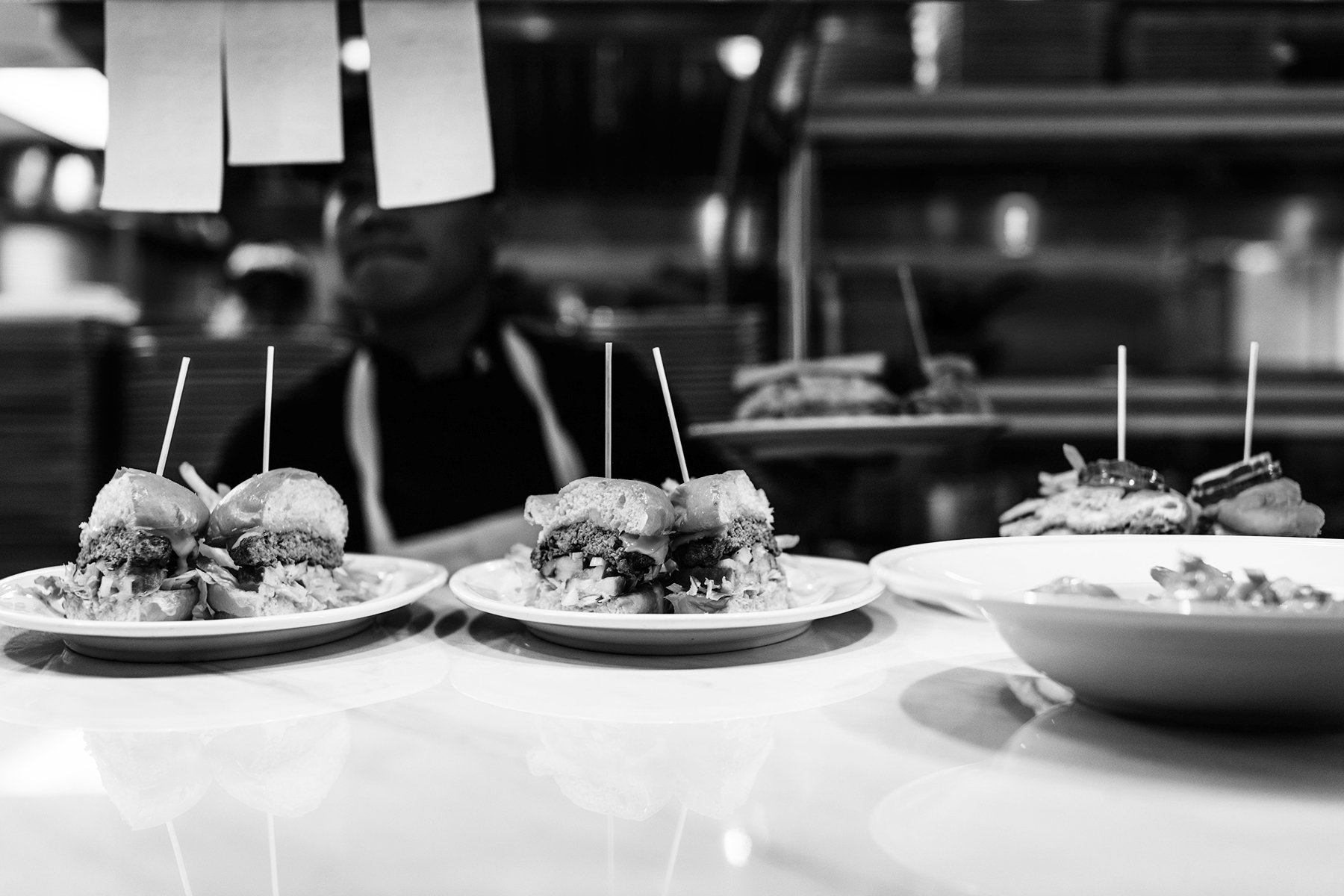
A flagship, revenue-generating pop-up was designed as the anchor experience, located in a high-traffic, prime area of the festival to maximise visibility and footfall. Working with the group’s partnering brand agency, the space was designed to be visually distinctive and highly shareable, while operationally we consulted with hospitality specialists to ensure it was fully staffed, food-safe, and POS-ready. The pop-up sold onsite both food-for-consumption (via a custom designed menu of lunch options) and take-hope perishable food products, converting brand engagement into direct commercial return.
Selected chef personalities showcased the group’s brand products live onstage, demonstrating recipes which featured key products. These live demonstrations included tastings for audiences and generated high-quality recipe content and footage that the group’s marketing team could then reappropriate for future online marketing content, extending value well beyond the festival.
Product placement was integrated throughout the wider festival ecosystem, including VIP menus, media placements, and on-screen brand integrations across precincts. This ensured a strong brand presence across various touchpoint of the festival, not just at the flagship popup.
Together, these elements created an experiential platform that aligned brand storytelling, partnerships, commercial return, and content creation into one coherent system.
Most importantly, this model was then more easily replicable across various major food events throughout the calendar year, easing the intensity and resourcing required for the group’s internal marketing team to consistently execute accordingly.
THE IMPACT
A repeatable experiential marketing system established, replacing one-off activations with a scalable model that could be redeployed across future campaigns with reduced production friction and clear ROI logic.
Direct revenue generated onsite through food and retail sales, demonstrating that experiential marketing could function as a commercial channel, not just a brand-awareness exercise.
Increased efficiency across future marketing campaigns, as teams no longer need to design experiential formats from scratch, freeing time and budget for creative and strategic innovation.
Reusable content assets created at scale, with chef-led demonstrations generating recipe IP, video, and brand content that continued to deliver value across digital and social channels.
Stronger brand credibility and cultural relevance achieved, through authentic chef partnerships and live product integration that aligned brand storytelling with real food expertise and consumer trust.
Clear internal alignment between marketing, partnerships, and commercial teams, enabled by a shared experiential framework that connected brand visibility, revenue generation, and partner value.
A durable experiential marketing platform introduced for a multi-brand portfolio, allowing individual brands within the group to plug into a proven model while maintaining consistency and strategic coherence.
NOTE
This case study reflects work that Principal & Founder Rachel O’Brien led in embedded strategic roles and demonstrate the approach now offered through this consultancy.
In an increasingly automated and depersonalised marketing landscape, experiential engagement remains one of the few ways brands can generate real connection, trust, and belonging. The challenge is how to do produce memorable, sticky experiences from a systematic approach: to create models, benchmarks, and resources that teams can use time and again, to compound value beyond any singular campaign.

Ready to design smarter experiential marketing models?
Let’s create great work together.